


Vented
- More realistic flame presentation
- Damper stays fully open during operation
- More traditional fireplace experience
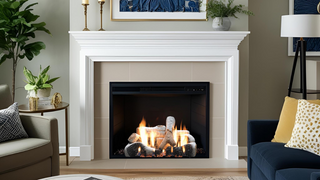
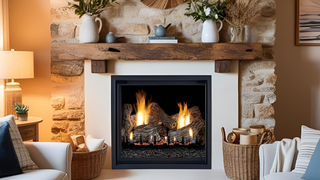
Choosing the right gas logs comes down to five decisions: fuel type, vented or vent-free, fireplace size, burner and ignition controls, and finally, the log set itself.
We've helped homeowners make these decisions since 1990, and this guide walks you through them in the order that makes buying easier.
Most people get stuck because they start with the logs. Wrong end. The log set is actually the last decision.
Once you've worked through the technical choices first, choosing the look you love becomes much easier.
Write your answers down as you go. At the bottom, there's a summary that turns them into a shopping list.
Already know your fuel and vent type? Jump straight to measuring your fireplace.
Rather have some help narrowing it down? Use our Product Finder to walk through your fireplace and see which options make sense.
This is the first fork in the road because burners are designed for a specific fuel.
Natural gas and liquid propane require different burner configurations.The burner components that regulate and mix the gas are sized for the fuel the system is designed to use. Using a burner configured for the wrong fuel can cause improper operation, excessive soot, and safety concerns.
Some systems can be converted from one fuel to another with a manufacturer-approved conversion kit, while others cannot. Never assume a gas log set is convertible. Choose the correct fuel version when ordering unless the manufacturer specifically approves conversion for that system.
So before you shop, answer this:
Natural Gas
Usually means you have a utility gas meter serving the home.
My fuel is Natural Gas
Liquid Propane
Usually means you have a propane tank serving your home.
My fuel is Liquid Propane
Not sure? Check an existing gas appliance in your home, or ask your installer before ordering.
This decision determines the role your fireplace will play.
Vented gas logs are designed for fireplaces built to burn wood. That includes traditional masonry fireplaces and many factory-built or prefabricated wood-burning fireplaces, sometimes called zero-clearance fireplaces.
Vent-free gas logs may also be an option in some masonry and approved factory-built fireplaces, depending on the fireplace, room size, installation requirements, manufacturer instructions, and local codes.
A sealed direct-vent fireplace is different. Although the name includes the word vent, it is not the same as a fireplace for vented gas logs. Direct-vent fireplaces are manufactured systems designed to use components approved for that specific unit. Do not assume that a standard vented or vent-free gas log set can be installed in a direct-vent fireplace. Check the fireplace manufacturer's specifications for the exact log set, burner, and components approved for your model.
In some cases, an approved log set may look familiar or even share a name with gas logs sold for other applications, which is why the fireplace model—not appearance alone—determines compatibility.
American Gas Works works through our distribution network with several major fireplace manufacturers. If you need replacement direct-vent parts, including an approved gas log assembly, contact us.
What matters most to you?
Vented
Vent-Free
Go deeper: Compare the differences in our complete Vented vs Vent-Free guide.
| Comparison point | Vented | Vent-Free |
|---|---|---|
| Flame appearance | Typically larger, more realistic flames |
Typically smaller, more controlled flames |
| Usable room heat | More heat is lost through the open chimney |
More heat stays in the room |
| Open chimney/flue during operation | Yes |
No, but installation and local-code requirements apply |
| Bedroom use | May be an option, depending on the fireplace and local requirements |
More restricted; only specific bedroom-approved sets may be used, where permitted |
STILL TORN?
If both options sound right, use the Product Finder to narrow them down based on your fireplace and what matters most to you.
Open the Product FinderThis is where most wrong orders happen.
Gas log size is not the same thing as fireplace opening width. A 24-inch log set does not fit every fireplace that looks 24 inches wide. Use the same four usable firebox dimensions you will see in the Product Finder and on AGW measuring guidance.
Measure the usable space inside the firebox. Not the mantel, not the hearth extension, not the outside brick. Inside only, and only the space the burner system can actually occupy.
Most fireboxes are tapered, which is why you need both widths. The back wall may be narrower than the front, and on many sets the rear width is what actually limits which size fits — not the opening you're looking at.
Then match against the product page, not a rule of thumb. Every gas log set on our site lists its minimum firebox dimensions in the description. Your numbers need to meet or exceed those minimums for the specific set and burner/control configuration you choose.
Go deeper: the step-by-step measuring guide explains usable firebox space, obstructions, tapered fireboxes, glass doors, and how to compare your numbers with product-page requirements.
This decides how the fire turns on — and it's the decision people regret most.
Your gas logs need the right hearth kit or burner system underneath them.
The hearth kit includes the components needed for the gas logs to operate properly. Depending on the system, that can include the burner pan with sand or vermiculite, the grate, valve, and other components designed for that particular log set.
The grate supports the logs and helps determine how they are positioned and displayed. The burner produces the flame, and the valve determines how the system is controlled.
Just as important, you can't assume that any set of logs can sit on any burner or hearth kit. The hearth kit has to be compatible with the logs you're buying.
With vented gas logs, there may be more than one compatible hearth kit or burner option available for a particular log set.
With vent-free gas logs, the logs and burner are designed to operate together as a specific system and should not be mixed and matched with other burners.
Four decisions in, the catalog has narrowed itself. What's left is genuinely a matter of taste — bark texture, log color, how full the stack looks, whether you want classic oak or something lighter.
You’ve made the decisions. Now see how they come together when you shop.
Your choices come together on the product page.
Fuel: Select Natural Gas or Propane.
Size: Choose a size that meets your fireplace requirements.
Ignition: Select from the compatible options offered with that burner system.
The set itself gets you 90% of the way there. Media closes the gap. Glowing embers scattered on the burner pan are the single cheapest upgrade that makes a set look more like a real fire — platinum embers in particular are brighter than standard, and mixing the two reads more natural than either alone. Decorative rock, sand and valve covers handle the rest.
You do not have to figure this out alone. We're a family-owned dealer near Ann Arbor and we've been doing this since 1990.
Call or text (734) 707-6589 · Message us
Need more detail? Explore our in-depth guides for the part of your fireplace decision you're working through.

Compare customer-favorite vented gas log styles for traditional fireplaces. See realistic oak and birch designs, burner options, sizing notes, and the vented log sets American Gas Works customers...
Read the Guide →
Our customers are speaking—and we’re listening. Based on recent sales and continued demand, here are the Top 5 Best-Selling Vent-Free Gas Logs for 2026 at American Gas Works.
Read the Guide →
Compare vented and vent-free gas logs to understand the differences in flame appearance, heat output, venting, installation, and fireplace compatibility—so you can choose the right type for your...
Read the Guide →
Selecting the right size gas logs for your fireplace isn't just about aesthetics—it's essential for safety, efficiency, and proper operation. Follow this simple guide to ensure you get...
Read the Guide →
First, decide how you want to control your fire. Do you want to manually turn your control knob to the “on” position? Or would you prefer a remote...
Read the Guide →WANT MORE HELPFUL TIPS?
Get practical buying guidance, product tips, seasonal reminders, and helpful advice from American Gas Works.
Helpful tips, product updates, and occasional offers. Unsubscribe anytime.


